
Section
Massena, New York · St. Lawrence County
Same neighbors. Deeper roots. More to offer.
North Country Colocation Services (“NCCS”) has been part of the Massena community since 2017. We are proposing to expand our existing operations on the same legacy industrial site, utilizing existing approved power capacity*, and making a long-term investment expected to become the town’s largest source of tax revenue.
~200
skilled full-time positions, with median salaries roughly 60% above St. Lawrence County's median household income per the latest U.S. Census Bureau estimates
~2,000
construction jobs over a roughly two-year phased build-out
#1
expected to become the largest taxpayer in the Town of Massena
0
new power generation, same approved power
Our Roots
A business that's been a part of Massena since 2017.
NCCS isn't new in town. We've been operating, hiring, volunteering, and paying taxes in Massena for nine years. Our proposed expansion builds on that foundation. We're committed to Massena for the long haul — not a speculative project waiting on someone else's power deal. We support ~60 full-time employees with competitive salaries and benefits, and have built lasting relationships with neighbors, schools, and first responders.
~60
full-time employees on-site today
$5M+
annual local payroll
$6M+
state & local tax payments per year
30
different local organizations supported over the last four years
COMMUNITY BENEFITS
A long-term investment in Massena's future.
The project is designed to deliver durable, generational benefits to the town and region — strengthening the tax base, creating high-quality permanent jobs, and routing investment through local trades, suppliers, and hospitality.
Protecting Local Consumer Electric Rates
We are paying 100% of the roughly $75 million in grid infrastructure upgrades. If our demand pushes up local power prices, we will work with the Town, the utilities, and independent experts to measure and fund any increase. We pay the difference, not residents.
~200 high-quality skilled jobs
About 200 full-time positions across operations, facilities management, IT, and administration, at an median salary roughly 60% above St. Lawrence County's median household income, per the latest U.S. Census Bureau estimates. Positions include comprehensive benefits such as healthcare, 401(k) match, and parental leave. Existing employees will have opportunities to retrain into higher-paying technical roles.
Funding Local Schools & Services
The expanded campus is expected to become the largest single contributor of local revenue in the Town of Massena, supporting schools, emergency services, roads, and other public services
residents use every day.
residents use every day.
~2,000 construction jobs, regionally sourced
Phased construction over roughly two years, with peak on-site workforce of 1,800–2,000. NCCS will prioritize regional labor, supplemented with specialized crews where required. The build-out is a concentrated infusion of wages and procurement into local trades, contractors, and suppliers.
Hotels, restaurants, suppliers
The local economy will gain meaningfully through construction and beyond. Construction will drive multi-year demand for lodging, restaurants, and
goods and services. Once the facility is operating, 200+ long-term roles will anchor growth, with local colleges and trade programs benefiting from new training and apprenticeship opportunities tied to careers right here in the community.
goods and services. Once the facility is operating, 200+ long-term roles will anchor growth, with local colleges and trade programs benefiting from new training and apprenticeship opportunities tied to careers right here in the community.
Reusing industrial land — not open space
The expansion adds two buildings on parcels adjacent to a long-industrialized, extensively studied site, replacing aging legacy infrastructure with modern, energy-efficient facilities. From rigorous environmental testing before construction through ongoing regulatory oversight, NCCS is committed to operations that respect Massena and the surrounding communities. Development returns this land to productive use under today's environmental standards.
$500M+
to County, Town, and Schools1
~$140M
direct to Town1
$1,300
per year average tax savings per household2
Our COMMITMENTS
Plain-language commitments, at a glance.
The full commitments are documented in our community materials and will be evaluated through New York’s State Environmental Quality Review (“SEQR”). Here is the short version.

Water
The cooling system is closed-loop and will not withdraw from — or discharge into —the St. Lawrence, Grasse, or Raquette rivers. Unlike evaporative systems shown inthe news, which consume millions of gallons per year, a closed loop recirculates thesame water for years.

Air
No manufacturing, chemical processing, or smokestacks. The facility operates nothing like the industrial operations that previously occupied this region. Emissions will be minimal, tightly controlled, and monitored through regular and ongoing testing and reporting to the New York State DEC.

Energy
Uses existing approved power capacity. No new fossil-fuel or nuclear generation is proposed. Power is sourced from transmission lines connecting into the Moses-Saunders hydroelectric dam, responsibly consuming clean energy from the grid at market rates without preferential treatment.

Waste
Certified electronics recycling for retired equipment in compliance with federal and state regulations. The facility does not generate hazardous industrial waste.

Noise
Acoustic modeling projects day-to-day sound levels below 50 dB at the nearest residential properties. That is quieter than a typical refrigerator. These results reflect conditions before mitigation. In practice, natural features such as trees and berms, together with acoustic enclosures, equipment screening, low-noise equipment, and thoughtful site layout, will further reduce noise.

Construction
Phased over approximately two years. No construction will begin until all required environmental reviews and permits are complete.

Consultation
Ongoing coordination with St. Regis Mohawk Tribal leadership, Town of Massena officials, NYS DEC, NYPA, and the New York State Historic Preservation Office. Public engagement through SEQR.
Project Brief
What this project is:

Expansion of an existing operating campus by reinvesting in data center infrastructure and operations on the site since 2017

Not affiliated with any green hydrogen proposals, nuclear proposals, or other data center proposals in Massena
Significant local investment creating long-term jobs, expanding the tax base, and supporting regional economic growth
Not connected to the former GM site
Retiring legacy industrial infrastructure and replacing it with modern, energy-efficient computing facilities designed to protect local waterways
Not a new or speculative developer
Supporting the local community through partnerships with schools, first responders, and community organizations
Not a manufacturing facility or heavy industrial operation
PROJECT Details
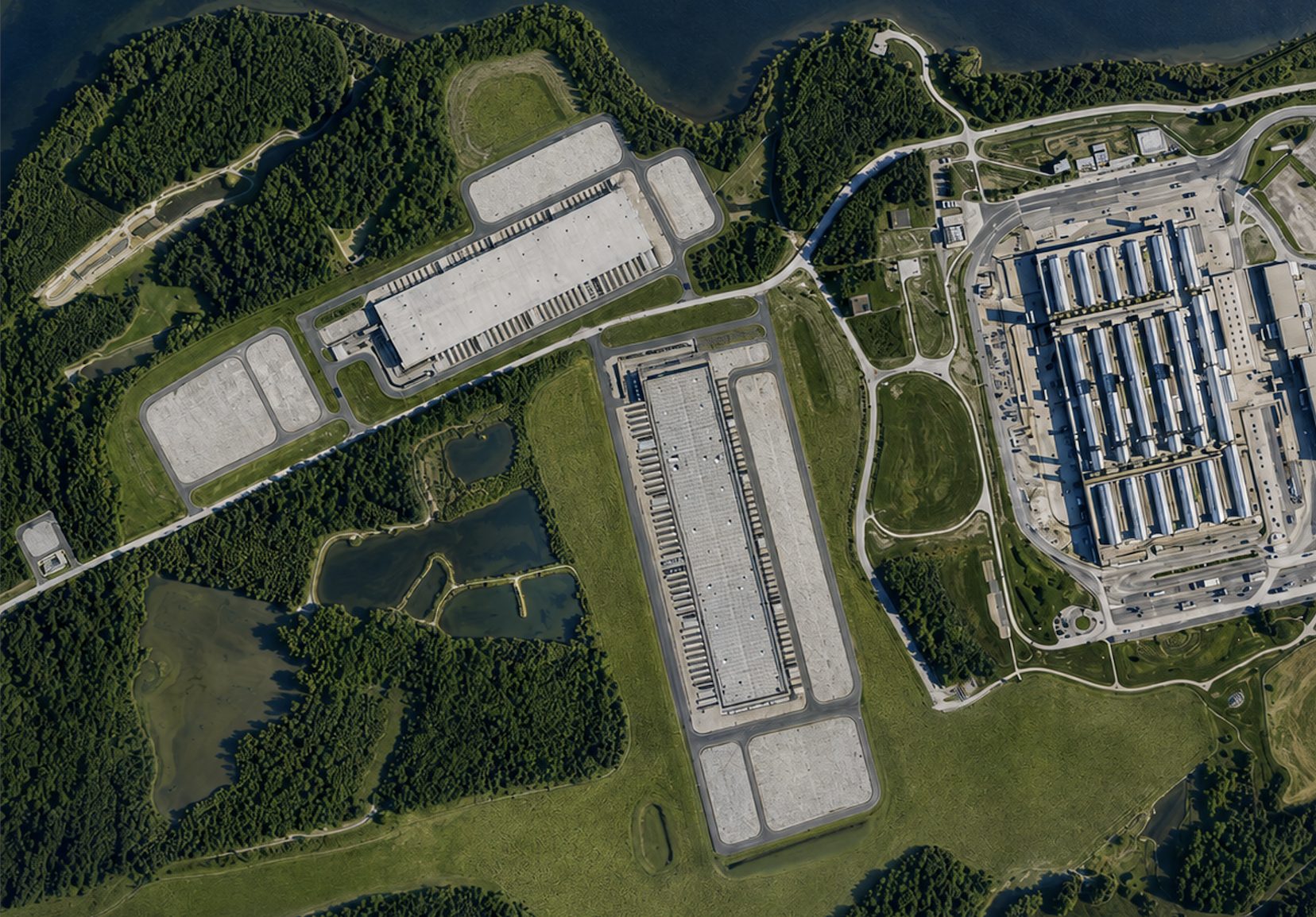
A modern computing campus on a legacy industrial site.
The proposed expansion adds two new buildings across phased development on parcels adjacent to our existing operations — reusing a long-industrialized site rather than building on undeveloped land.
SITE
Legacy Reynolds industrial parcel — adjacent to NCCS's current operating data center site, Massena, NY.
BUILDINGS
Two data halls, phased development, with detailed site plan prepared.
ACREAGE
~355 developable acres of expansion, adjacent to existing ~110-acre site with significant existing industrial infrastructure.
POWER
Existing approved capacity. Hydroelectric power from the St. Lawrence River. No new fossil-fuel or nuclear generation proposed.
CONSTRUCTION
Approximately two years, phased. Begins only after all environmental reviews and permits are complete. Peak workforce 1,800–2,000.
USE CASE
Modern computing and AI infrastructure, replacing the existing on-site bitcoin mining operations, which will be sunset.
NCCS has worked, and will continue to work, closely with independent experts, regulatory agencies, and the community conducting in-depth reviews across environmental, infrastructure and cultural impacts to assess any impacts on the environment and community.
Responding to community feedback
An improved design, informed by community input
Since releasing our initial site plan, we have engaged with community members, local officials, and technical stakeholders. That dialogue, combined with continued engineering refinement, has substantially improved the design. The updates below reduce the project's draw on local resources, shrink its physical and environmental footprint, and reinforce our commitment to being a responsible long-term neighbor.
Water: A Fully Closed-Loop Cooling System
The project has advanced from a partially closed-loop design to a fully sealed cooling system using water and non-toxic, biodegradable glycol. Much like a car's radiator, a closed loop continuously recirculates the same cooling fluid within a sealed system. Heat is carried away from the servers and rejected without drawing from, or discharging into, any external water body. This change eliminates the facility's interaction with local water sources for non-contact cooling water. The result is a design that protects the St. Lawrence watershed and conserves a shared regional resource.
KEY BENEFITS
No dependence on local water sources for cooling operations
No discharge to local waterways, protecting aquatic ecosystems and water quality
Generators: An 80% Reduction in Emergency Power Units
Through extensive design refinement, we have reduced the planned number of emergency generators by roughly 80%, from 316 to 64. These generators provide standby power only during grid interruptions and periodic testing. They do not run during normal operation.
KEY BENEFITS
Reduced noise during periodic generator testing
Reduced on-site fuel storage
Footprint: Building 3 Eliminated, ~600,000 Sq Ft Removed
In response to community concerns about the project's scale and physical presence, we redesigned the site plan around two buildings rather than three. This removes Building 3 and approximately 600,000 square feet of building footprint. Building 3 also sat closest to neighboring homes, so its removal directly increases the facility's distance from its nearest residents.
KEY BENEFITS
Less land disturbance and reduced impervious surface
Lower stormwater runoff and a smaller drainage impact
Greater separation from the nearest residential properties
A reduced visual and physical presence on the site
Benefits of Modern ComputinG
Benefits of Modern Computing
Modern computing facilities are buildings filled with powerful computers that process large amounts of information for everyday applications — including healthcare, education, research, business, and AI tools.
Examples of tasks that advanced computing facilities like the Massena campus are built to support:
Examples of tasks that advanced computing facilities like the Massena campus are built to support:
HEALTHCARE
Detect diseases earlier, develop new medicines faster, and provide better care to patients.
CLIMATE + ENERGY
Model weather, optimize energy grids, and develop cleaner technologies.
EDUCATION
Personalized learning tools adapted to each student, making education more accessible and effective for everyone.
TRANSPORTATION
Safer roads through navigation, traffic management, and vehicle safety systems that protect drivers and pedestrians.
AGRICULTURE
Predict crop yields, manage water use, and reduce waste — feeding more people sustainably.
PUBLIC SAFETY
Faster disaster response, better 911 systems, and community safety planning.
By providing the computing capacity behind modern tools and services, Massena can help power the next generation of critical industries — from healthcare and energy to education and public safety.
FREQUENTLY ASKED Questions
Questions we've heard from you, our neighbors.
Direct answers to the questions Massena residents and the Akwesasne community have raised. If you have a question not covered here, please reach out — we will answer it.
How much power will the campus use, and where does it come from?


The expansion uses existing approved power capacity already permitted to serve the NCCS site. Massena's electricity comes primarily from hydroelectric generation on the St. Lawrence River — one of the cleanest and most cost-stable electricity sources in North America. We are not proposing to add any new fossil-fuel generation to the grid, and we are not affiliated with any nuclear proposal.
How much water does the facility use? What about the St. Lawrence, Grasse, and Raquette rivers?
Protecting the St. Lawrence, Grasse, and Raquette river systems is a top priority. The facility's cooling system is built around a closed-loop design that does not interact with local waterways. In a closed-loop design, water is imported in (via trucks) and recirculated, which removes the need to withdraw and discharge water for cooling from any nearby waterways.
Will the facility be loud? What does it sound like at the property line?
Modern data centers are purpose-built to minimize noise: acoustic enclosures, equipment screening, and careful site layout reduce sound at the boundary. Primary sound sources are cooling systems and emergency generators — not manufacturing or combustion equipment. A modern data center at its property boundary, on its loudest day, is comparable to ambient suburban background noise, and is significantly quieter than traditional industrial uses on this site. Sound levels will be formally modeled and compared to New York State and local standards as part of the mandatory SEQR environmental review, and results will be shared with Town and Tribal representatives and the public before any construction begins.
What about air emissions? Is this anything like the old aluminum smelter?
It is fundamentally different. The facility does not include manufacturing, chemical processing, or industrial combustion processes. There are no smokestacks or process emissions. The computing equipment runs on electricity and does not emit hazardous chemicals, toxic gases, or radiation. Emergency generators are required for emergency reliability only and operate in accordance with NYSDEC air permits and federal emissions standards and will be monitored on an ongoing basis.
Why does a map in the project application label the area "Akwesasne"?
That map is a U.S. Geological Survey (USGS) topographic map, which federal environmental standards require in every Phase I Environmental Site Assessment. "Akwesasne" is a place-name printed on the existing 2023 USGS basemap — it was not added by the project team. Federal mapping associates the broader topographic area with that name, including a Census reporting area extending into St. Lawrence County and parts of the Town of Massena. A place name on a topographic map does not determine ownership, boundaries, or jurisdiction, much as a property can have a "Massena" mailing address without being inside the Town or Village of Massena.
How will the project affect traffic and roads?
Traffic impacts during the phased two-year construction window will be evaluated through SEQR. Routes, timing, and any required road improvements will be coordinated with the Town of Massena and applicable agencies. Once operational, a modern data center generates far less daily traffic than traditional industrial uses on this site — there are no trucking-intensive manufacturing flows, no shift-change surges, and no heavy freight cycles. Day-to-day traffic is primarily staff commuting and routine deliveries.
What kinds of jobs will the project create — and who can apply?
Approximately 200 permanent full-time positions across operations, facilities management, IT, and administration, with competitive technical salaries roughly 60% higher than current operations and comprehensive benefits. Existing NCCS employees will have opportunities to retrain into higher-paying technical roles. Construction adds approximately 2,000 jobs over a roughly two-year phased build-out, with regional labor prioritized and specialized crews supplementing local workers where required. Workforce partnerships with regional colleges and trade programs will be implemented as part of the long-term plan.
How are you engaging with the community?
NCCS is committed to maintaining an open dialogue with the community throughout the public review and permitting process, including:
- Participation in the State Environmental Quality Review (SEQR) process, including public meetings and publicly available environmental documents
- Cultural-resource review with the New York State Historic Preservation Office (SHPO) in coordination with St. Regis Mohawk Tribal representatives
- NYSDEC air, water, and environmental permitting
- Town of Massena site-plan and local permitting
- Infrastructure planning coordination with NYPA
We also sponsor more than 30 community organizations across St. Lawrence County. NCCS recognizes the St. Regis Mohawk Tribe as a federally recognized sovereign nation with a distinct government, history, and inherent rights, and is committed to respectful, ongoing engagement with Tribal leadership and community members. This includes supporting SRMT programs such as the annual art market and disABILITIES Awareness Day. We intend to maintain ongoing communication with Tribal leadership, Town officials, and community members throughout development and operation.
Timeline
A phased path, with no construction before permits.
The project is sequenced so each step depends on regulatory approval and community engagement before the next begins. No construction begins until all required environmental reviews and permits are complete.
2022 – 2025
COMPLETE
Load studies, existing infrastructure upgrades, and feasibility analysis
2025 – Late 2026
ACTIVE
Engineering & Site Design
Detailed engineering, design, and changes informed by community feedback
Environmental & Regulatory Review
SEQR diligence, wetlands and cultural-resource reviews, advanced permitting
Public Engagement & Coordination
Public meetings, agency coordination, and community engagement
Late 2026
Planned
Initial construction (subject to permits & approvals)
Late 2026 – 2028
Planned
Phased build-out and energization
Resources
NCCS Massena Data Center August 14, 2026 Supplemental Site Plan Application
(This supplements the NCCS Massena Data Center April 3, 2026 Site Plan Application)
Click view to download the supplemental site plan
Modern Computing Campus Project Overview
Click to view the presentation shared at the Massena Town Planning Board meeting
Have a question, a concern, or want to meet a real person from NCCS?
We'd like to hear from you directly. We will continue to add to the FAQ as we engage with the community.
© 2026 North Country Colocation Services. An affiliate of New York Digital Investment Group (NYDIG).